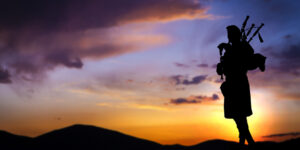
Few instruments are as instantly recognisable as Scottish bagpipes. Their powerful sound and deep cultural roots have made them one of Scotland's most iconic symbols.
Whether played at Highland gatherings, military parades, or special ceremonies, the sound of the pipes stirs emotion like no other and remains closely tied to Scotland's history and identity.
While many people associate bagpipes solely with Scotland, the instrument has ancient origins. Variations existed across parts of the Middle East and Europe over a thousand years ago.
In Scotland, however, the bagpipes evolved into the powerful, ceremonial instrument we recognise today. By the 16th century, the Great Highland Bagpipe had become the dominant form. The bagpipes have become a lasting symbol of defiance and national pride.
The most well-known type of bagpipe, the Great Highland Bagpipe, consists of a bag, three drones, a blowpipe, and a chanter.
Air is blown into the bag and then squeezed under the arm, producing a continuous sound. The chanter plays the melody, and the drones create the distinctive harmonic background sound of the pipes.
Bagpipes will always remain an important part of Scottish tradition. They are commonly played at weddings, funerals, Remembrance Day services, Highland Games, and Hogmanay celebrations around the country. For many visitors, seeing and hearing a piper is an unforgettable part of any trip to Scotland.
The military also helped spread the influence of bagpipes worldwide, with Scottish regiments proudly featuring pipers for centuries. Events such as the Edinburgh Military Tattoo showcase this tradition on an international stage.
Today, they continue to inspire pride among Scots both at home and abroad.
Some of the most famous and widely played tunes include:
Modern pipers also perform rock and pop music, sharing their performances online and bringing the instrument to new audiences. A well-known example is Red Hot Chilli Pipers.
Bagpipes are a complex instrument to learn and require a lot of patience. Beginners usually start with a practice chanter to develop finger technique and breathing control. Before progressing to playing the pipes.
In Scotland, most towns have a local pipe band or piping club, which is one of the best ways to learn how to play the pipes. These groups often offer structured lessons, access to experienced pipers, and the opportunity to progress into a full pipe band.
Bagpipes can be purchased from specialist retailers such as McCallum Bagpipes, David Naill & Co, The Bagpipe Shop, and Wallace Bagpipes, as well as from trusted online outlets.
Practice chanters can cost as little as £40. A basic set typically ranges from £80 to £500 for beginners. Professional sets will cost well over £2,000.
They can be challenging at first due to the coordination required between blowing, squeezing the bag, and finger placement. Starting with a practice chanter allows skills to develop gradually.
Scotland the Brave, Flower of Scotland, and Highland Cathedral are among the most commonly played bagpipe tunes in Scotland.
The Great Highland Bagpipe was designed for outdoor use. The powerful drones and chanter project sound, while the continuous airflow creates a penetrating tone that we recognise today.
The Lone Piper is a traditional part of Hogmanay celebrations in Edinburgh. As midnight strikes, a solo bagpiper plays from Edinburgh Castle, marking the end of the year with a moment of reflection and national pride.
Home matches at Murrayfield Stadium, a piper plays as the teams take the field and during the Scottish National Anthem. This powerful tradition helps create an amazing atmosphere in Murrayfield.
Yes. Alongside traditional music, many pipers now perform film soundtracks, pop, and rock music, often shared widely online and on social media.