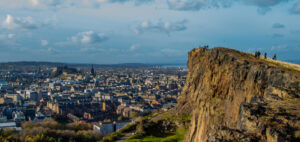
Arthur's Seat is one of the most recognisable natural landmarks in Edinburgh, rising 251 metres above the city and offering spectacular panoramic views in every direction. Located within Holyrood Park, it feels wonderfully wild despite being just a short walk from the Royal Mile and Holyrood Palace.
This extinct volcano is believed to have formed around 340 million years ago. It's part of the same geological formation as Salisbury Crags and the surrounding rugged landscape of Holyrood Park. Its name, "Arthur's Seat," is often linked to the legends of King Arthur, although there's no confirmed connection.
Climbing Arthur's Seat is possible for most visitors with a basic level of fitness, and one of its biggest attractions is the variety of routes available. The most direct ascent begins near Dunsapie Loch and offers a shorter but steeper climb to the summit.
For a gentler and more scenic option, many people start near Holyrood Palace, following winding paths that gradually rise through the park and beneath Salisbury Crags. This route provides a rewarding mix of natural scenery, history, and changing views across the city as you climb.
Reaching the summit is well worth the effort. From the top, sweeping views of Edinburgh, the Firth of Forth, and on clear days, you can see as far as the Pentland Hills. Sunrise and sunset are particularly popular times to visit, when the city is bathed in warm light, and landmarks such as Edinburgh Castle stand out dramatically against the skyline.
Arthur's Seat forms part of the wider Holyrood Park, managed by Historic Environment Scotland. The main event is the climb for the views, although visitors should enjoy peaceful walks around St Margaret's Loch, explore the atmospheric ruins of St Anthony's Chapel, or take in the striking contrast between rugged natural scenery and the historic city below.
Our climb took 45 minutes, going the most direct route. This will vary depending on your fitness level and the route you choose. Allow extra time for photos and enjoying the views if you have a good day.
Yes. While some paths are steeper than others, many visitors with a basic level of fitness manage the climb comfortably by taking their time.
Popular starting points include Dunsapie Loch for a more direct climb, or near Holyrood Palace for a longer, more scenic ascent.
Yes. On clear days, Edinburgh Castle is clearly visible from the summit, along with much of the city centre and coastline.
Yes. Arthur's Seat and Holyrood Park are open year-round, though paths can be slippery in winter or after heavy rain.